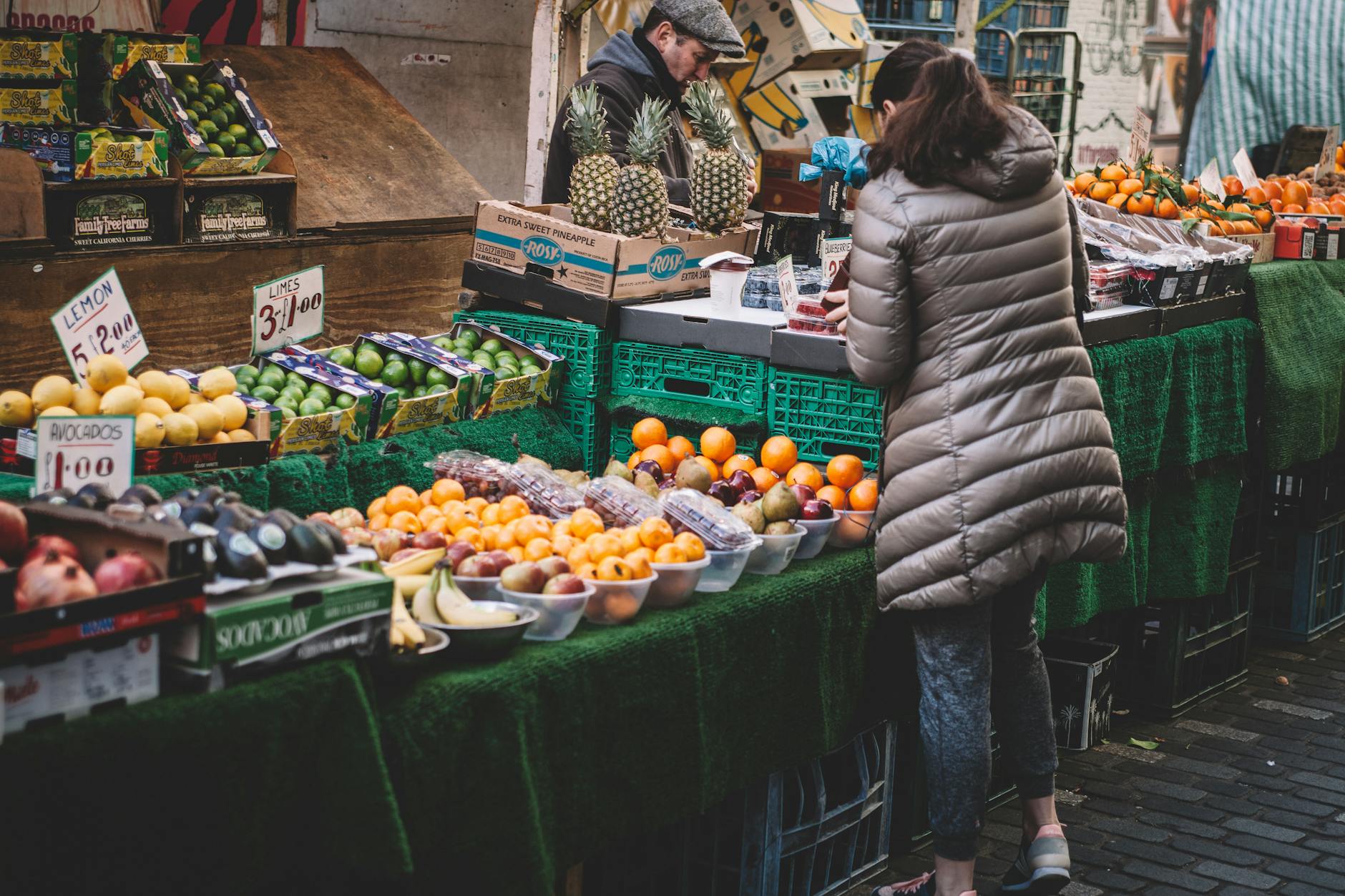
The Economics of Local Food: Why Buying from Neighbors Makes Financial Sense
The common perception that local food is expensive misses a crucial reality: the conventional food system's apparent affordability hides enormous hidden costs that consumers and communities ultimately pay. When you factor in transportation, packaging, spoilage, environmental damage, and health impacts, local food from neighbors is often the most economically rational choice.
This article breaks down the real economics of local food systems and demonstrates why platforms connecting local growers with local consumers create value for everyone involved.
The Hidden Costs of Conventional Food
When you buy a tomato at a supermarket for $3 per pound, you are paying for:
- Growing (30% of cost)
- Harvesting and processing (15%)
- Packaging (10%)
- Transportation — often 1,500+ miles (20%)
- Retail markup (25%)
But you are also paying hidden costs through taxes and externalities:
- Agricultural subsidies (taxpayer-funded)
- Environmental remediation (pollution, water contamination)
- Healthcare costs from pesticide exposure and nutrient-poor food
- Infrastructure for long-distance food transport
- Waste management for packaging and spoiled food
The true cost of that $3 tomato, when externalities are included, is estimated at $5-7.
The Local Food Value Proposition
When you buy (or trade for) a tomato from your neighbor:
- Growing cost: Similar
- Harvesting/processing: Minimal (you pick it up)
- Packaging: Zero
- Transportation: Zero (or negligible)
- Retail markup: Zero
- Spoilage: Near zero (harvested same day)
- Environmental externalities: Near zero
The true cost is dramatically lower because you eliminate the entire distribution and packaging supply chain. The grower receives more of the value, and the consumer pays less for a superior product.
Why Local Growers Can Price Competitively
Home gardeners and small-scale farmers on LocalHarvest often price produce below supermarket rates while still earning fair compensation. This is possible because:
- Zero distribution costs: No trucking, warehousing, or retail lease
- Zero packaging: Produce goes from garden to hands directly
- Zero spoilage markup: Supermarkets price 30% waste into every item
- Hobby subsidization: Many gardeners grow because they enjoy it — selling surplus is bonus income
- Community pricing: Neighbors price for accessibility, not maximum extraction
The Bartering Economy: Beyond Cash
The barter system on our platform creates economic value that cash transactions cannot:
- No tax friction: Trades of equivalent value are personal exchanges
- No currency needed: Participation does not require disposable income
- Diverse access: Even without money, you can access fresh food by offering what you have
- Reduced inequality: Everyone with something to offer can participate in the food economy
Swap circles amplify this further — six-party trades create value chains that would be impossible in conventional markets.
Economic Impact on Families
A family actively using local food platforms can save significantly on groceries:
- Growing your own: $500-2,000 in annual produce from a modest garden
- Trading surplus: Access to diverse foods without additional spending
- Community pricing: 20-40% below supermarket prices for local produce
- Reduced waste: Buying exactly what you need, when you need it
- Seasonal eating: In-season produce is always cheapest
Conservative estimates suggest families actively using platforms like LocalHarvest save $1,500-3,000 annually on produce costs.
Economic Impact on Communities
Local food spending has a multiplier effect. Money spent at a neighbor's garden stand circulates locally 2-3 times more than money spent at a national chain. This means:
- More local jobs (even if informal/part-time)
- More local investment
- Higher property values in active garden neighborhoods
- Reduced municipal food waste collection costs
- Lower healthcare costs from better nutrition
The Role of Technology
Platforms like LocalHarvest reduce the transaction costs that historically made local food impractical at scale:
- Discovery costs: Marketplace search eliminates the effort of finding local produce
- Coordination costs: Scheduling and messaging streamline logistics
- Trust costs: Reviews and reputation reduce risk in peer-to-peer transactions
- Matching costs: AI recommendations connect compatible buyers and sellers
Without technology, local food trading is limited to farmers markets (fixed times, limited selection) and personal networks (small reach). With platform infrastructure, the entire community becomes a continuously available marketplace.
Making Local Food Affordable for Everyone
Price is a barrier for some families. Our platform addresses affordability through:
- Donation system: Food rescue ensures no one goes hungry
- Barter access: Trading requires no money at all
- Community pricing: Growers often offer sliding-scale or pay-what-you-can
- Green points: Active participation earns rewards redeemable for produce
The Investment Perspective
Starting a garden is an investment with excellent returns:
- Startup cost: $100-500 for basic setup (soil, seeds, containers)
- Annual maintenance: $50-200 (seeds, amendments, water)
- Annual production value: $500-3,000+ depending on scale and intensity
- Payback period: Often within the first season
This represents a 200-600% annual return on investment — far exceeding traditional financial investments. And unlike stocks, garden returns come in the form of food that simultaneously improves your health.
Building Wealth Through Community Food Systems
Long-term engagement with local food systems builds multiple forms of wealth:
- Social capital: Relationships with neighbors and community members
- Knowledge capital: Growing skills that last a lifetime
- Health capital: Better nutrition from fresh, local produce
- Financial capital: Direct savings and potential income from surplus sales
- Environmental capital: Contributing to ecosystem health
Start Saving Today
Ready to experience the economics of local food firsthand?
- Create your LocalHarvest account — it is free
- Browse affordable local produce in your area
- List anything you grow — even herbs or extra tomatoes
- Try a barter trade for variety without spending
- Track your savings on your dashboard
- Check the leaderboard to see community-wide impact
The economics are clear: local food from neighbors is fresher, healthier, more sustainable, and often cheaper than supermarket alternatives. The only remaining question is why you have not started yet.
Join LocalHarvest and discover what your neighbors are growing. Your wallet — and your taste buds — will notice the difference immediately.